



 Home>Blog>How to start a small groundnut oil business in Nigeria: Complete machine list & process guide
How to start a small groundnut oil business in Nigeria: Complete machine list & process guide
FAQ / Chat on line / Give me a price / Date:September 29, 2026
Starting a small groundnut oil processing business in Nigeria requires more than just an oil press. A practical setup normally includes groundnut shelling, cleaning, crushing, cooking, oil pressing, and crude oil filtration. If you plan to sell standardized refined cooking oil, you will also need oil refining and filling equipment.
The right machine configuration depends mainly on the form of your groundnuts, target processing capacity, product type, and whether you plan to sell filtered groundnut oil or refined bottled oil. This guide is written by the team at Glory Oiltech (Henan Glory), based on our practical experience delivering groundnut oil processing solutions in Nigeria. It explains the machines you may need for your small groundnut oil processing plant, how the processing line works, and what to consider when choosing a groundnut oil processing equipment supplier in Nigeria.
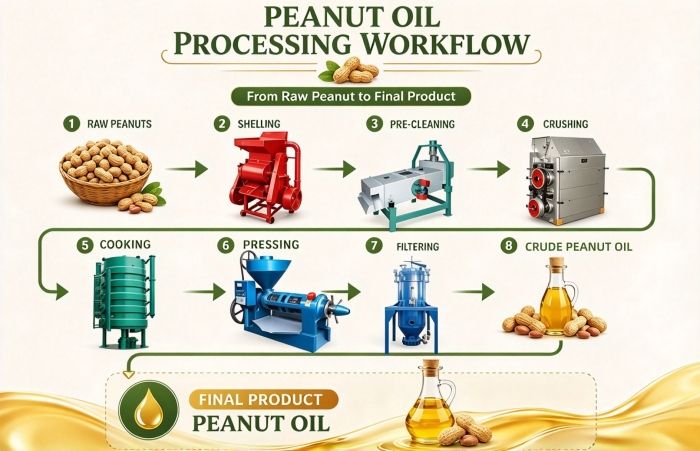 Groundnut oil processing workflow
Complete Machine List for a Small Groundnut Oil Processing Plant
Before you break ground, here is a full inventory of the equipment you will need for a small groundnut oil processing plant. Each item is flagged as essential (core to production) or optional (smart additions for later scaling) so you can phase your investment wisely.
| Machine | Primary Function | Must-Have or Optional |
|---|---|---|
| Groundnut Shelling Machine | Removes outer shells from raw groundnuts to extract clean kernels | Essential (if processing unshelled groundnuts) |
| Cleaning Machine | Separates dirt, sand, stones, and broken shell fragments from kernels | Essential |
| Crushing Machine | Breaks kernels into smaller pieces to prepare them for cooking and pressing. | Essential |
| Drum Roaster / Cooking Machine | Roasts kernels at controlled temperature for optimal oil release and flavor | Essential |
| Screw Oil Press (Expeller) | Crushes roasted kernels under high mechanical pressure to extract crude oil | Essential |
| Oil Filter Press | Clears fine sediment and particles from crude oil for a clean golden finish | Essential |
| Mini Oil Refinery Unit | Degums, deacidifies, decolorizes, and deodorizes oil for premium refined grade | Optional |
| Filling & Packaging Line | Automates bottling, capping, and labeling for retail-ready product | Optional |
The exact equipment configuration depends on your raw material condition, target capacity, final product, and available utilities. Even items marked as "essential" are not mandatory for every project — for example, one of our Nigerian customers, a peanut farmer looking for a simple and cost-effective solution, chose our 3TPD peanut oil expeller with integrated filtration, which combines extraction and vacuum filtration in one unit and eliminates the need for separate pressing and filtration machines. If you buy shelled and cleaned groundnut kernels, the shelling stage may not be required. If you plan to sell filtered groundnut oil rather than refined bottled oil, a refinery may also be unnecessary.
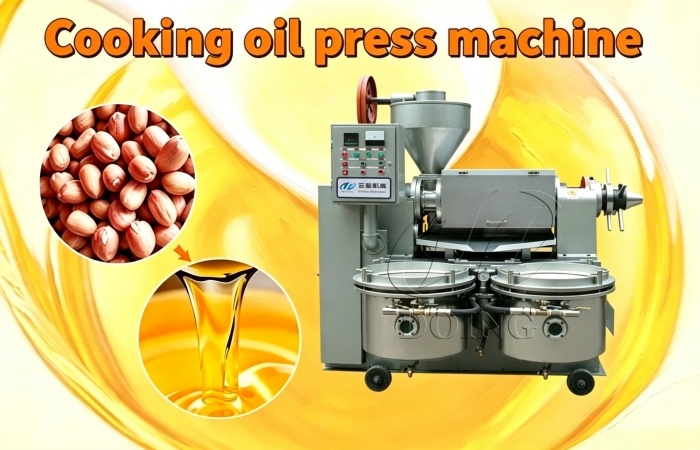 Peanut oil expeller with filter
Step-by-Step Production Process
Groundnuts → Shelling → Cleaning → Crushing → Cooking → Screw Pressing → Filtration → Optional Refining → Filling & Packaging
Step 1 — Shelling
Whole groundnut pods are fed into a shelling machine to separate the kernels from the shells. The removed shells have market value too — they can be sold as animal bedding or biomass fuel. If you purchase already-shelled kernels, this step can be omitted.
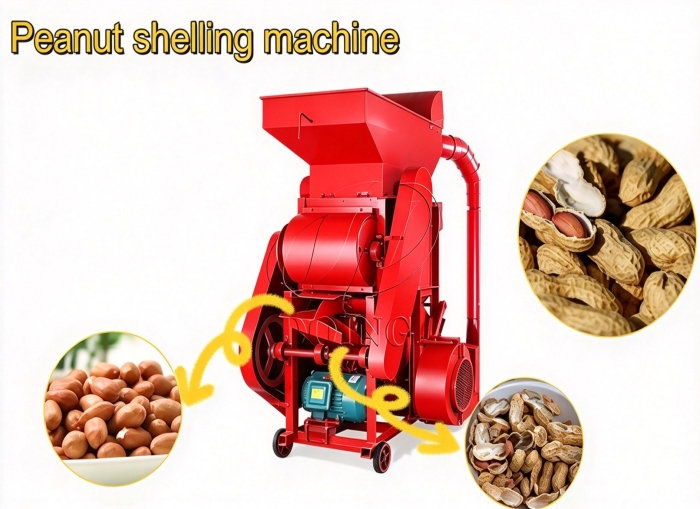 Groundnut shelling machine
Step 2 — Cleaning
The kernels are cleaned to remove soil, stones, dust, and broken shell residues. Vibrating screens and destoning equipment can be used depending on the raw material condition. Effective cleaning helps protect downstream equipment and maintain more consistent processing conditions.
Step 3 — Crushing
Clean groundnut kernels are broken into smaller pieces before cooking and pressing. Crushing helps expose more of the kernel structure and allows more even heating during the cooking stage. The crusher should be matched with the capacity of the cooking and pressing equipment.
Step 4 — Cooking
The crushed groundnut kernels are heated before pressing. Cooking conditions such as temperature and moisture are adjusted according to the raw material, processing capacity, and press configuration. The cooking stage should be designed as part of the complete processing line rather than selected as an isolated machine. At Glory Oiltech, we hold a utility model patent for a peanut oil cooking machine, with optimized temperature curves and drum rotation speeds specifically for groundnuts, helping operators hit the sweet spot between oil yield and flavor consistency.
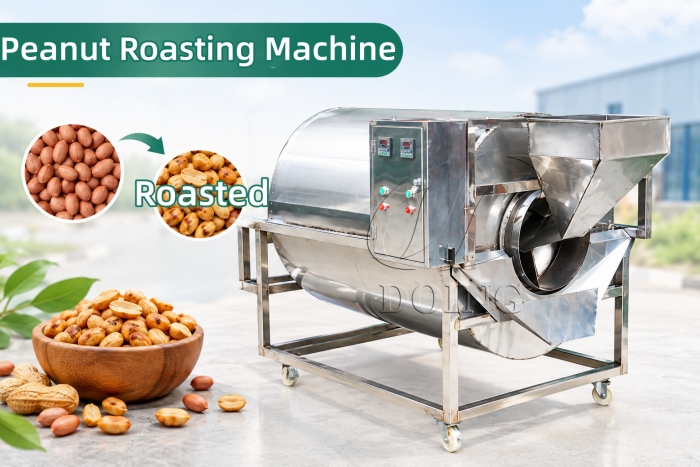 Groundnut roasting machine
Step 5 — Mechanical Pressing
A screw oil press mechanically extracts oil from the prepared groundnut material, producing crude groundnut oil and press cake. Our expellers leave only 7–8% residual oil in the cake — meaning more revenue from every ton of peanuts you process. Actual oil yield and residual oil in the cake depend on factors such as groundnut variety, moisture, pretreatment conditions, press configuration, and operating parameters. This is where a reliable screw oil press makes the difference.
Step 6 — Filtration
The crude oil from the screw press contains fine solids and oil cake particles. A filter press removes these suspended impurities and produces cleaner filtered groundnut oil. For businesses selling mechanically pressed and filtered oil, filtration may be the final oil-processing stage.
Step 7 — Refining and Packaging
If the target product is refined bottled groundnut oil, the filtered crude oil can be sent to an oil refinery for further processing. Depending on the crude oil and refining process, stages may include degumming, neutralization or deacidification, bleaching, and deodorization. The refined oil can then be sent to filling and packaging equipment.
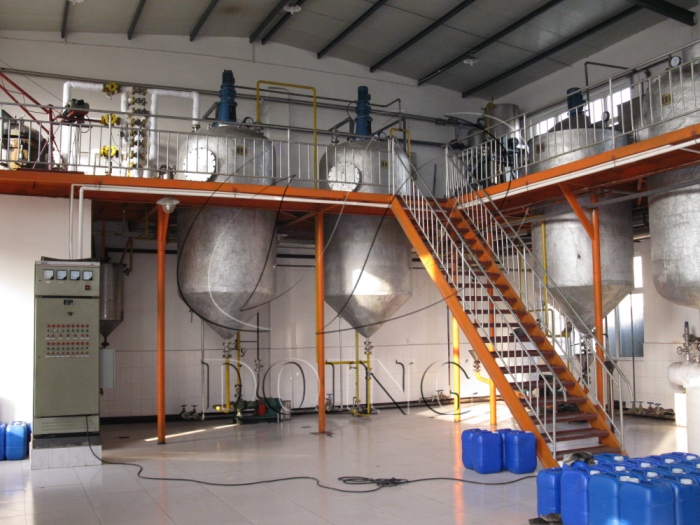 Groundnut oil refining machine
Configuration Plans: Pick What Fits Your Budget
Option 1: Filtered Groundnut Oil (Basic Setup)
Equipment: Sheller → Cleaner → Roaster → Screw Press → Filter Press
Typical output: Small-scale mechanical pressing and filtration line suitable for local market supply
Ideal for: First-time entrants, local market suppliers, businesses that also produce kuli-kuli (a popular Nigerian snack) from spent cake
Option 2: Refined and Bottled Groundnut Oil (Advanced Setup)
Equipment: Everything in Basic + Mini Refinery + Filling & Packaging Line
Typical output: Full production line with refined, bottled, branded product ready for shelf
Ideal for: Established entrepreneurs, supermarket suppliers, brands targeting premium segments or export markets
Choosing the Right Supplier for Your Nigeria Groundnut Oil Project
When planning your groundnut oil processing plant in Nigeria, the supplier you choose can make a significant difference in timeline, downtime, and total cost of ownership. Here are practical factors to evaluate.
Local Warehouse and Technical Support
Logistics delays can stall your entire operation. Suppliers with a physical warehouse in Nigeria can ship spare parts and replacement components within days rather than waiting weeks for international freight. At Glory Oiltech, we have operated a 1,000-square-meter warehouse in Ogun State, Nigeria since 2019, stocking best-selling machines and commonly needed spare parts to keep your production running.
Turnkey EPC Service
A true Engineering, Procurement, and Construction (EPC) package covers everything from factory layout design and equipment manufacturing to overseas installation, commissioning, and operator training. This one-stop approach eliminates the coordination headaches of managing multiple vendors and ensures all equipment interfaces are validated before shipment.
Proven Nigeria Delivery Track Record
Look for suppliers who can point to completed projects on the ground. At Glory Oiltech, we have delivered groundnut oil pretreatment and pressing plants in Nigeria, including a 60 tons-per-day project. We have also completed large-scale oilseed processing lines in the country — such as a 50 TPD soybean oil pressing production line in Nigeria that was installed within 35 days and put into trial operation, demonstrating rapid on-site execution capability in the Nigerian market.
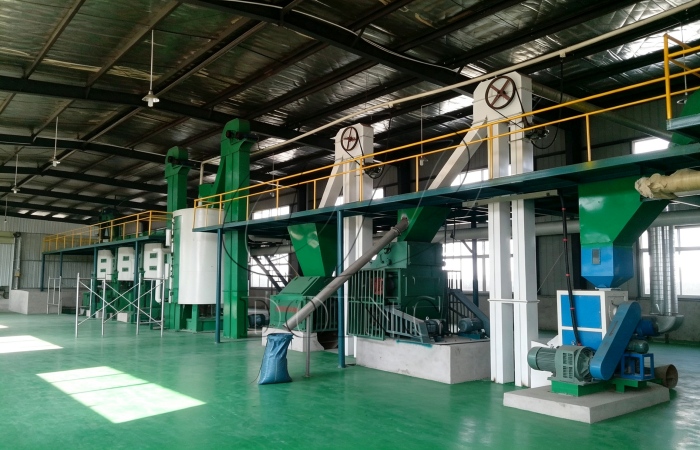 Nigeria cooking oil processing project
Manufacturing Capacity and Quality Control
Check that the supplier's factory holds relevant quality and environmental certifications and has the production capacity to deliver your project on schedule. We operate a 40,000-square-meter manufacturing facility in China and have more than 40 experienced engineers available for project support. Relevant manufacturing and quality certifications should also be checked when evaluating an equipment supplier.
Frequently Asked Questions
Should I process unshelled groundnuts or buy ready kernels to lower my first investment?
It depends on your raw material access, not on which machine is cheaper. Buying pods cuts your per-kg input cost but needs a shelling machine, a cleaning machine, and labour; the removed shells resell as animal bedding or biomass fuel and offset part of the cost. Buying cleaned kernels lets you drop the sheller and cleaner from day one — smaller footprint, fewer parts, faster to first oil, at a higher per-kg price. Many Nigerian starters run a hybrid: process their own or local pods off-season, buy cleaned kernels at peak harvest to keep the press running. Tell us your kernel form and we'll spec the line around it.
What capacity should I start with, and what line do you recommend?
For most first-time market entrants in Nigeria, our small 1–10 TPD groundnut oil pressing line for this stage centres on three core units: a drum roaster, a screw conveyor enabling continuous material flow between processes, and an integrated screw press with vacuum filter that produces clear filtered oil, eliminating the need for a standalone filter press. Together they cover cooking, pressing and filtration as one balanced line. This integrated setup is the fast path to first oil — fewer machines, less labour, and residual oil held at our typical 7–8%. If you process unshelled pods rather than cleaned kernels, we add shelling and cleaning upstream; for bottled refined oil, we add the mini refinery and filling line. Tell us your kernel form and steady monthly volume and we'll spec the exact configuration.
What hidden costs catch first-time groundnut oil processors in Nigeria?
Your machine quote is rarely the largest cost. Beyond the equipment, budget for landed cost (ocean freight, Nigerian port clearing, customs duty, haulage to site), wearable spare parts (screens, worms, belts), power backup for grid gaps, and site works such as foundation, water and drainage. Also plan for ramp-up: operator training and trial-run waste in the first weeks.
Nigeria's electricity supply is unreliable — what power setup should I plan for?
Most small and medium groundnut oil equipment runs on standard 380V/50Hz three-phase industrial power, available across Nigerian industrial areas and cities. The real question is backup, not base supply: clients in unstable-grid locations typically add a generator or inverter bank sized to the line's load so a blackout doesn't stall a pressing batch mid-run. Share your local power situation with us and we'll include a power-compatibility check in your proposal so every machine matches your actual supply.
Get Your Customized Groundnut Oil Processing Solution
Whether you are starting lean with a basic pressing and filtration line or planning a full refinery from day one, getting your equipment right the first time prevents costly rework and production bottlenecks down the road.
Get a customized groundnut oil processing solution and equipment quote tailored to your budget, target capacity, and Nigerian market segment. Contact Glory Oiltech today!
contact us
Kindly leave your message in below form. Our engineer will contact you ASAP once we got your message.
- QWhat is your raw material?
- QHow many tons do you want to process per day?
- QWhat machine do you want? or other requirement?